


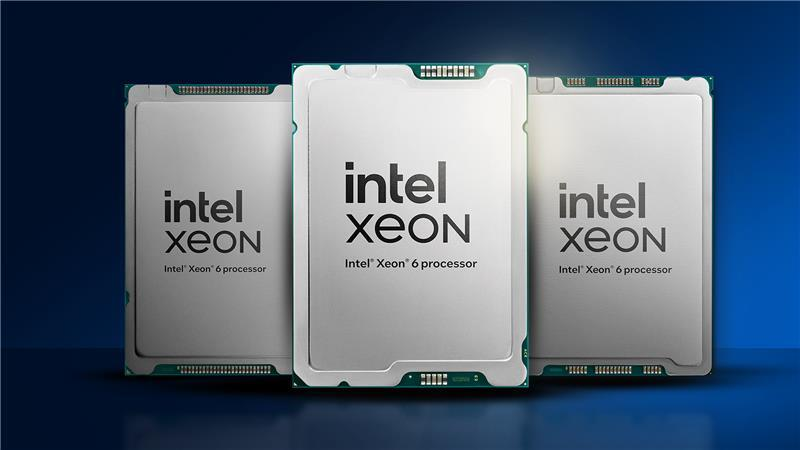

Overview
The Intel Xeon Gold 6242R is a high-performance server processor in the 2nd-Generation Intel Xeon Scalable family (Cascade Lake Refresh). It emphasizes a balance of high per-core frequency and multi-core throughput for demanding enterprise workloads. With 20 physical cores and 40 threads, elevated base clock and a robust thermal envelope, the 6242R is targeted at virtualization hosts, database front ends, analytics nodes and latency-sensitive enterprise applications that benefit from both clock speed and core density.
Key features at a glance
-
20 cores / 40 threads for strong parallel throughput
-
High base clock of 3.10 GHz and Turbo up to 4.10 GHz for responsive single-thread bursts
-
35.75 MB shared L3 cache to improve working set performance
-
Six memory channels with DDR4-2933 support for high memory bandwidth
-
205 W TDP for sustained heavy workloads in properly cooled servers
-
Socket FCLGA3647 for standard 2-socket enterprise platforms
-
Support for AVX-512, Intel Deep Learning Boost, AES-NI, and full virtualization/RAS feature set
Full specification table
| Parameter | Specification |
|---|---|
| Product family | 2nd-Gen Intel Xeon Scalable (Cascade Lake Refresh) |
| Model | Intel Xeon Gold 6242R |
| Total cores / threads | 20 / 40 |
| Processor base frequency | 3.10 GHz |
| Max turbo frequency | 4.10 GHz |
| L3 cache | 35.75 MB |
| Lithography | 14 nm |
| Socket | FCLGA3647 (LGA 3647) |
| Typical TDP | 205 W |
| Memory type & speed | DDR4-2933 (ECC supported) |
| Memory channels | 6 (hexa-channel) |
| Max memory capacity (per socket) | Platform dependent (commonly up to 1 TB) |
| PCI Express | PCIe 3.0, up to 48 lanes (platform dependent) |
| UPI links | 2 |
| Max CPU configuration | Dual-socket (2S) |
| Instruction set & extensions | 64-bit; AVX, AVX2, AVX-512, AES-NI, Intel DL Boost |
| Virtualization & security | Intel VT-x, VT-d, EPT, hardware security features |
| Target segment | Enterprise servers, virtualization, databases, analytics, HPC |
Architecture & notable technologies
-
Built on the Cascade Lake Refresh microarchitecture with enterprise optimizations for reliability and performance.
-
AVX-512 support delivers higher throughput for vectorized and compute-heavy kernels.
-
Intel Deep Learning Boost accelerates certain inference workloads without requiring discrete accelerators.
-
Comprehensive RAS and virtualization capabilities (ECC memory, VM extensions, resource director features) for production datacenters.
Performance positioning & recommended workloads
-
Virtualization and cloud hosts: High core count plus fast clocks make the 6242R excellent for consolidated VM hosts and container nodes where per-VM responsiveness matters.
-
Database front-ends and analytics: Large L3 cache and six memory channels suit OLTP/OLAP, in-memory caching, and analytics pipelines.
-
Latency-sensitive enterprise apps: Elevated base clock improves response times for transactional systems, real-time analytics and financial workloads.
-
Compute workloads with wide vectors: AVX-512 benefits scientific computing, media processing and certain machine-learning inference paths.
Deployment notes
-
Verify motherboard and firmware support for Cascade Lake Refresh processors and the FCLGA3647 socket.
-
Use certified ECC RDIMM/LRDIMM modules and adhere to vendor DIMM population guidelines to reach rated memory speeds.
-
Plan for cooling and power delivery appropriate to 205 W TDP, especially in dense multi-socket racks.
-
Check platform I/O topology if PCIe lane count or NVMe/GPU allocation is critical for your design.
Pros & Cons
Pros
-
Strong blend of per-core speed and multi-core throughput.
-
Large memory bandwidth via six memory channels.
-
AVX-512 and DL Boost add value for specialized compute and inference workloads.
-
Designed for dual-socket enterprise servers with mature platform ecosystem.
Cons
-
Higher TDP (205 W) requires more aggressive cooling and power budgeting.
-
Based on 14 nm Cascade Lake Refresh — newer generations offer PCIe 4.x/5.x and updated process nodes with improved efficiency.
-
PCIe 3.0 (platform dependent) offers less I/O bandwidth than newer PCIe standards.
Reviews
There are no reviews yet.